The Buyer’s Guide to Extended Warranties: Are They Worth It?
Advertisements
Navigating extended warranties requires careful consideration of costs versus benefits. This guide explores whether the typical 15% premium offers genuine long-term value. Understanding product reliability and policy specifics is crucial for informed decisions.
Welcome to The Buyer’s Guide to Extended Warranties: Are They Worth the 15% Premium?, a critical examination for today’s savvy consumer.
In a marketplace filled with product choices, the decision to purchase an extended warranty often adds a layer of complexity.
Advertisements
This guide aims to cut through the noise, offering clear, actionable insights into whether these additional protection plans truly offer value for your money.
The Buyer’s Guide to Extended Warranties: Are They Worth the 15% Premium?
Understanding the Extended Warranty Landscape
Extended warranties, often presented at the point of sale, promise peace of mind beyond the manufacturer’s guarantee.
They typically cover repairs or replacements for a specified period after the original warranty expires.
The question many consumers face is whether this additional cost, often around a 15% premium, is a justifiable expense.
What Exactly is an Extended Warranty?
An extended warranty is essentially an insurance policy for your product, covering malfunctions or defects.
It’s distinct from a manufacturer’s warranty, which is included with the purchase.
Providers can be retailers, manufacturers, or independent third-party companies.
Common Misconceptions and Realities
Many believe extended warranties cover all possible issues, which is rarely the case.
Exclusions for accidental damage, cosmetic issues, or specific components are common.
Understanding these limitations is vital before committing to the purchase.
Evaluating the 15% Premium: A Cost-Benefit Analysis
The 15% premium often cited for extended warranties can significantly increase the total cost of an item.
This section delves into how to assess if this added expense aligns with your financial strategy and product usage.
It’s about weighing the potential repair costs against the upfront investment.

Assessing Product Reliability and Longevity
High-quality products from reputable brands often have lower failure rates.
Researching product reviews and reliability ratings can indicate the likelihood of needing repairs.
For highly reliable items, the 15% premium might be an unnecessary expenditure.
Calculating Potential Repair Costs
Consider the average cost of common repairs for the specific product in question.
If typical repair costs are less than the warranty premium, the warranty may not be financially sound.
This is a crucial step in determining if The Buyer’s Guide to Extended Warranties: Are They Worth the 15% Premium? provides real value.
- Research average repair costs for your specific item.
- Compare these costs against the extended warranty premium.
- Factor in the deductible, if any, charged by the warranty provider.
- Consider your personal risk tolerance for unexpected expenses.
Factors Influencing Your Decision
Several variables play a role in deciding if an extended warranty is a wise purchase.
These factors range from the type of product to your personal financial situation and risk aversion.
This helps personalize the considerations within The Buyer’s Guide to Extended Warranties: Are They Worth the 15% Premium?.
Product Type and Complexity
Complex electronics or appliances with numerous moving parts may be more prone to failure.
Conversely, simpler, more robust items might not justify the extra protection.
The higher the repair cost for a specific product, the more appealing an extended warranty might become.
Your Personal Financial Situation
Having an emergency fund or robust savings can mitigate the impact of unexpected repair costs.
For those with tighter budgets, an extended warranty could offer a sense of security.
However, it’s essential not to overextend financially for a warranty that might not be used.
Alternatives to Extended Warranties
Before committing to an extended warranty, explore alternative protection options.
Many consumers overlook existing coverages or more cost-effective ways to manage potential repair expenses.
This part of The Buyer’s Guide to Extended Warranties: Are They Worth the 15% Premium? offers practical alternatives.
Credit Card Protections
Many credit cards offer extended warranty benefits, often doubling the manufacturer’s warranty period.
Check your credit card agreement for these hidden perks before purchasing additional coverage.
This can effectively negate the need for a separate extended warranty, saving you the 15% premium.
Building an Emergency Fund for Repairs
Setting aside a dedicated fund for unexpected repairs can be a more flexible approach.
This fund can cover any product, not just those with an extended warranty.
It also allows you to retain control over your money, rather than paying a premium upfront.
Navigating the Fine Print: What to Look For
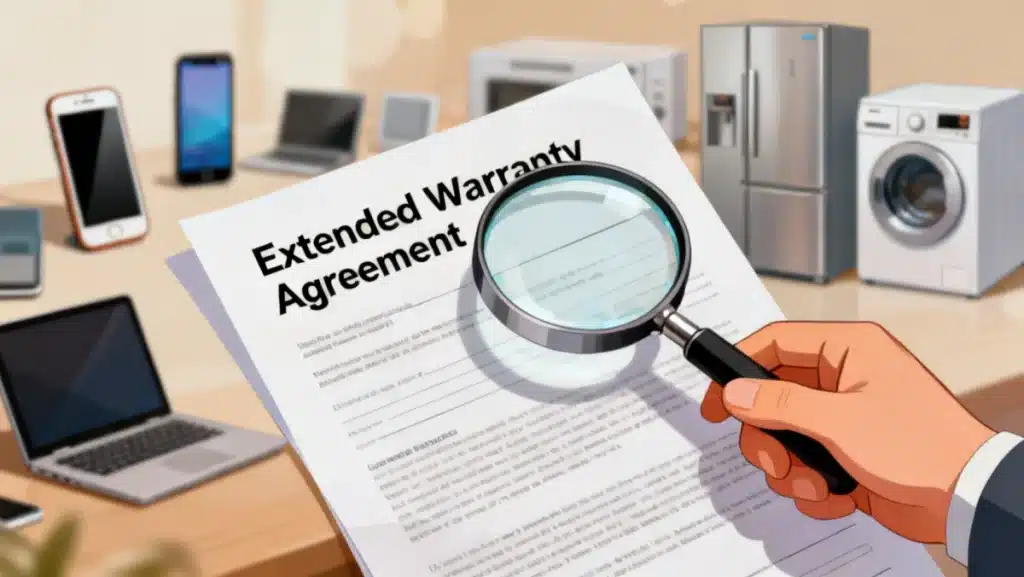
If you decide an extended warranty is right for you, scrutinizing the contract details is paramount.
The terms and conditions can vary significantly between providers, impacting the true value of your purchase.
This is where The Buyer’s Guide to Extended Warranties: Are They Worth the 15% Premium? becomes indispensable.
Coverage Details and Exclusions
Understand precisely what is covered and, more importantly, what is not.
Look for clauses regarding wear and tear, accidental damage, and specific component failures.
A warranty with too many exclusions might not provide the protection you anticipate for the 15% premium.
Deductibles and Service Processes
Some extended warranties come with a deductible, meaning you pay a portion of the repair cost.
Also, investigate the service process: who performs repairs, how claims are filed, and typical turnaround times.
A cumbersome claims process can negate the benefits of having coverage.
Real-World Scenarios and Expert Opinions
Examining various situations helps illustrate when an extended warranty might be beneficial or not.
Expert insights often highlight the nuanced aspects of these protection plans, moving beyond simple cost analysis.
This section provides a practical lens for The Buyer’s Guide to Extended Warranties: Are They Worth the 15% Premium?.
When an Extended Warranty Might Be Worth It
For high-cost items with known reliability issues or expensive specialized repairs, an extended warranty can be a safeguard.
Examples include certain high-end appliances or complex automotive components.
If the cost of a single major repair significantly exceeds the 15% premium, it could be a worthwhile investment.
Case Studies: Successes and Regrets
Consider the homeowner who purchased an extended warranty for a smart refrigerator, which experienced a control panel failure just after the manufacturer’s warranty expired. The warranty covered a $700 repair, far exceeding the initial $150 premium.
Conversely, a consumer buying an extended warranty for a highly reliable laptop might find it an unused expense.
These real-world examples underscore the importance of individual assessment within The Buyer’s Guide to Extended Warranties: Are They Worth the 15% Premium?.
The Future of Extended Warranties and Consumer Protection
The landscape of extended warranties is continually evolving, with new models and regulations emerging.
Understanding these trends can help consumers make more informed decisions in the years to come.
This forward-looking perspective is crucial for any comprehensive buyer’s guide to extended warranties.
Technological Advancements and Product Lifespans
As technology advances, product lifespans can vary dramatically, impacting the perceived value of extended coverage.
Some products are designed for shorter lifecycles, while others are built to last.
This dynamic influences whether the 15% premium offers sufficient protection.
Regulatory Changes and Consumer Rights
Consumer protection laws are becoming more robust, potentially offering greater recourse for product failures.
Stay informed about your rights, as these can sometimes overlap with or even supersede extended warranty benefits.
This knowledge is an integral part of navigating The Buyer’s Guide to Extended Warranties: Are They Worth the 15% Premium? effectively.
Next Steps
For consumers pondering The Buyer’s Guide to Extended Warranties: Are They Worth the 15% Premium?, the path forward involves diligent research and a personalized assessment. Do not rush into a decision at the point of sale. Instead, take the time to compare the warranty’s cost against potential repair expenses, consider your credit card benefits, and evaluate the product’s inherent reliability. Understanding the fine print and exploring alternatives like an emergency repair fund will empower you to make a financially sound choice that truly aligns with your needs and provides genuine peace of mind.