AI in Product Recommendations: A 4-Point Guide to Personalized Shopping

Advertisements
Artificial intelligence is fundamentally reshaping how consumers interact with online retail platforms. This guide delves into The Role of AI in Product Recommendations: A 4-Point Guide to Personalized Shopping, offering insights into optimizing digital purchasing journeys. Discover the mechanisms behind hyper-personalized suggestions and their impact on consumer behavior.
The Role of AI in Product Recommendations: A 4-Point Guide to Personalized Shopping
The digital retail landscape is evolving at an unprecedented pace, driven largely by advancements in artificial intelligence. Understanding The Role of AI in Product Recommendations: A 4-Point Guide to Personalized Shopping is crucial for both consumers and businesses.
Advertisements
AI-powered recommendation engines are no longer a novelty; they are an expectation. These sophisticated systems analyze vast datasets to deliver highly relevant product suggestions, enhancing the overall shopping experience.
The continuous refinement of these algorithms promises even more intuitive and anticipatory recommendations. This guide explores the core components and benefits of AI in shaping personalized shopping.
Understanding AI’s Foundational Impact on E-commerce
Artificial intelligence has become an indispensable tool in modern e-commerce, moving beyond simple data analysis. It now actively shapes user journeys, making each interaction unique and tailored.
This transformative power is most evident in The Role of AI in Product Recommendations: A 4-Point Guide to Personalized Shopping. AI algorithms process complex behavioral patterns, purchase histories, and real-time interactions.
The goal is to anticipate consumer needs, presenting products that resonate deeply with individual preferences. This proactive approach significantly boosts customer satisfaction and conversion rates.
Data-Driven Personalization: The Core of AI Recommendations
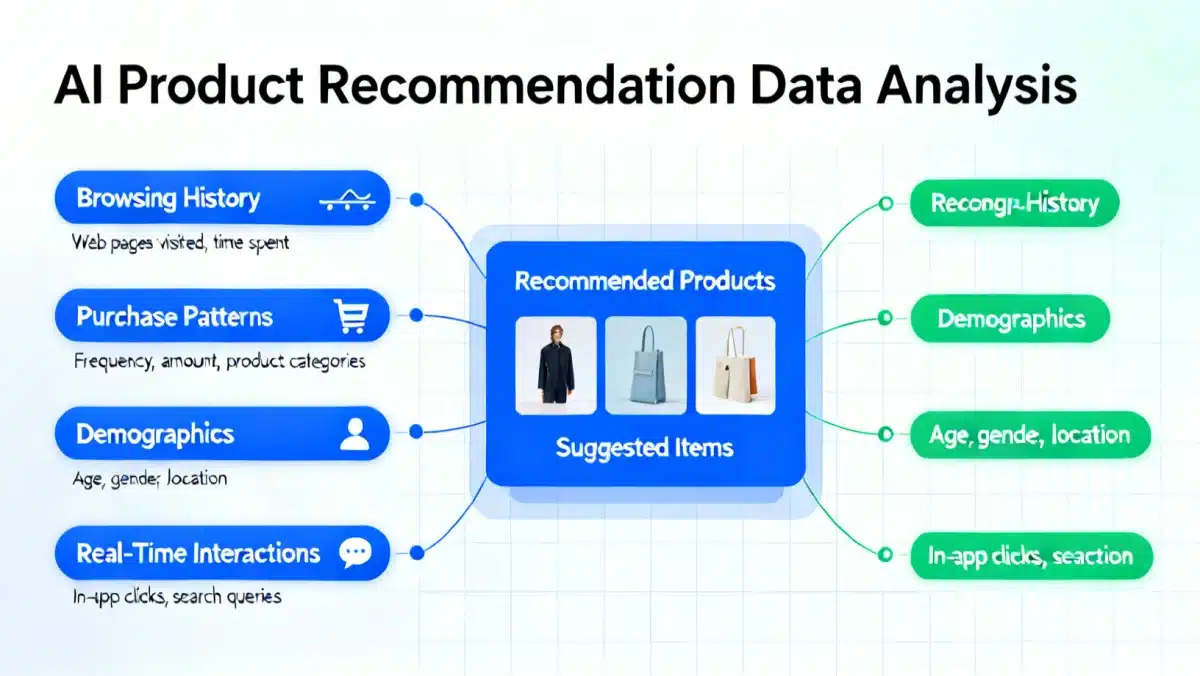
At the heart of effective AI recommendations lies robust data collection and analysis. Every click, view, and purchase contributes to a comprehensive user profile.
AI systems leverage this data to identify subtle patterns and correlations. This allows for the creation of truly personalized shopping experiences, moving beyond generic suggestions.
The continuous learning nature of these algorithms ensures recommendations improve over time. They adapt to changing preferences and emerging trends dynamically.
Algorithmic Approaches: Collaborative Filtering and Beyond
Collaborative filtering remains a cornerstone of AI product recommendations. It identifies users with similar tastes and suggests items favored by those peers.
Content-based filtering, another key method, recommends products similar to those a user has liked in the past. Hybrid models combine these approaches for superior accuracy.
Deep learning networks are now pushing boundaries, uncovering even more complex relationships. This continuous innovation strengthens The Role of AI in Product Recommendations: A 4-Point Guide to Personalized Shopping.
- User behavior analysis for pattern recognition.
- Real-time data processing for immediate suggestions.
- Predictive modeling for future purchase likelihood.
- Semantic analysis of product descriptions and reviews.
The Four Pillars of Personalized Shopping with AI
Personalized shopping experiences are defined by several key AI-driven components. These pillars collectively form the foundation of effective recommendation systems.
Each element plays a crucial part in delivering relevant and timely suggestions to consumers. Understanding these pillars is essential for grasping The Role of AI in Product Recommendations: A 4-Point Guide to Personalized Shopping.
From initial discovery to post-purchase engagement, AI optimizes every stage. This holistic approach ensures a seamless and highly engaging retail journey for every user.
Pillar 1: Behavioral Tracking and Profiling
AI systems meticulously track user interactions across platforms. This includes browsing history, search queries, and items added to carts or wishlists.
Each interaction contributes to a detailed individual profile. This profile becomes the basis for understanding preferences and potential interests, crucial for The Role of AI in Product Recommendations: A 4-Point Guide to Personalized Shopping.
Advanced AI can even infer preferences from passive signals, like time spent on a product page. This rich data enables highly targeted recommendations, making the shopping experience genuinely personal.
Pillar 2: Contextual Awareness and Real-time Adaptation
Beyond historical data, AI considers the immediate context of a user’s session. Factors like device type, location, and time of day can influence recommendations.
Real-time adaptation means suggestions change as a user’s behavior evolves within a single session. If a user starts browsing for winter coats, AI quickly shifts its focus.
This dynamic responsiveness is a hallmark of sophisticated AI recommendation engines. It ensures that recommendations are always fresh and highly relevant to the moment.
Enhancing Customer Journey Through Predictive Analytics
Predictive analytics, powered by AI, is transforming the customer journey from reactive to proactive. It anticipates future needs and behaviors, offering solutions before they are explicitly sought.
This capability is a cornerstone of The Role of AI in Product Recommendations: A 4-Point Guide to Personalized Shopping. By forecasting trends and individual preferences, AI streamlines the discovery process.
The result is a more intuitive and efficient shopping experience for consumers. Businesses benefit from increased engagement and higher conversion rates.
Pillar 3: Cross-Channel Consistency and Omni-channel Integration
Modern consumers interact with brands across multiple channels: websites, mobile apps, social media, and even in-store. AI ensures a consistent personalized experience across all touchpoints.
An item viewed on a mobile app might reappear as a recommendation on the desktop site. This seamless integration reinforces the personalized journey, a key aspect of The Role of AI in Product Recommendations: A 4-Point Guide to Personalized Shopping.
Omni-channel AI ensures that preferences learned in one channel inform recommendations in another. This creates a unified and coherent brand experience, strengthening customer loyalty.
Pillar 4: Feedback Loops and Continuous Learning
AI recommendation systems are not static; they continuously learn and improve. Every user interaction provides valuable feedback, whether a purchase, a click, or an ignored suggestion.
These feedback loops are critical for refining algorithms and enhancing accuracy over time. Machine learning models adapt to new data, making future recommendations even more precise.
This iterative process ensures that The Role of AI in Product Recommendations: A 4-Point Guide to Personalized Shopping remains at the forefront of retail innovation. The systems become smarter with every interaction.
The Future Landscape of AI-Driven Retail
The trajectory of AI in retail points towards even more immersive and anticipatory experiences. Virtual and augmented reality will likely integrate with AI recommendations.
Imagine trying on clothes virtually, with AI suggesting complementary items based on your style profile. This is the next frontier for The Role of AI in Product Recommendations: A 4-Point Guide to Personalized Shopping.
Voice commerce is also set to expand, with AI assistants providing personalized product suggestions based on spoken queries. This will further naturalize the shopping process.
Ethical Considerations and Data Privacy in AI Recommendations
As AI becomes more pervasive, ethical considerations regarding data privacy and algorithmic bias gain prominence. Transparency in data usage is paramount for consumer trust.
Regulations like GDPR and CCPA are setting precedents for how personal data is handled. Companies must prioritize responsible AI development and deployment.
Ensuring fairness and preventing discriminatory recommendations are critical challenges. Addressing these will be vital for the sustainable growth of The Role of AI in Product Recommendations: A 4-Point Guide to Personalized Shopping.
- Promoting data transparency and user control.
- Developing unbiased algorithms to avoid discrimination.
- Adhering to evolving data privacy regulations.
- Educating consumers on how their data is used.
Strategic Implementation: Maximizing AI’s Potential
For retailers, strategically implementing AI product recommendations is crucial for competitive advantage. It requires more than just adopting technology; it demands a clear vision.
Integrating AI across all customer touchpoints ensures a unified and powerful personalization engine. This holistic approach maximizes the impact of The Role of AI in Product Recommendations: A 4-Point Guide to Personalized Shopping.
Continuous monitoring and optimization of AI models are also essential. Performance metrics must be regularly reviewed to ensure effectiveness and adapt to market changes.
Real-World Impact: Case Studies in AI Success
Major e-commerce players like Amazon and Netflix are prime examples of AI recommendation success. Their sophisticated algorithms drive a significant portion of their revenue.
These platforms demonstrate how powerful The Role of AI in Product Recommendations: A 4-Point Guide to Personalized Shopping can be. Their ability to anticipate user desires keeps customers engaged and returning.
Smaller businesses are also leveraging accessible AI tools to personalize experiences. This democratization of AI technology is leveling the playing field in online retail.
Impact and Implications
The pervasive influence of The Role of AI in Product Recommendations: A 4-Point Guide to Personalized Shopping continues to redefine consumer expectations. Shoppers now anticipate highly relevant suggestions, making generic experiences feel outdated.
This shift necessitates that retailers invest in advanced AI capabilities to remain competitive. The ongoing development of more sophisticated algorithms will further deepen personalization, creating hyper-tailored digital storefronts.
Looking ahead, the integration of AI with emerging technologies like generative AI for product descriptions and personalized marketing copy will be transformative. This evolution promises an even more intuitive and anticipatory shopping future, challenging traditional retail paradigms.