Smart Garden Devices: 4 Innovations That Reduce Water Usage by 30%
Advertisements
The advent of Smart Garden Devices is transforming water management in residential and commercial landscapes. These innovations promise significant reductions in water usage, enhancing sustainability efforts. Understanding these advancements is crucial for modern gardening practices.
Smart Garden Devices: 4 Innovations That Reduce Water Usage by 30%
The landscape of modern gardening is undergoing a profound transformation. New technologies are emerging, promising unprecedented efficiency.
Advertisements
Among these, Smart Garden Devices: 4 Innovations That Reduce Water Usage by 30% stand out, directly addressing critical environmental concerns.
These systems are not just about convenience; they represent a vital step towards sustainable living and responsible resource management.
Precision Irrigation Systems Revolutionize Water Use
Precision irrigation systems are at the forefront of water conservation efforts. They deliver water directly to the plant roots, minimizing waste.
These smart garden devices utilize advanced sensors and data analytics. This ensures optimal hydration without overwatering or runoff.
The integration of these systems into residential and commercial settings is rapidly expanding. This marks a significant shift in irrigation practices.
Modern precision irrigation employs sophisticated algorithms. These algorithms adjust watering schedules based on real-time environmental data.
Automated Scheduling and Weather Integration
Automated scheduling, a core feature of many Smart Garden Devices, leverages local weather forecasts. This prevents unnecessary watering before rain.
These systems integrate with online weather services, adapting in real time. This dynamic approach ensures plants receive adequate hydration.
Users can customize watering zones and plant types. This allows for tailored care across diverse garden landscapes.
The efficiency gains from these integrations are substantial. They contribute significantly to the 30% water reduction target.
- Real-time weather data integration for optimized watering.
- Customizable zones for different plant hydration needs.
- Automated adjustments prevent overwatering and waste.
Advanced Soil Moisture Sensors Drive Efficiency
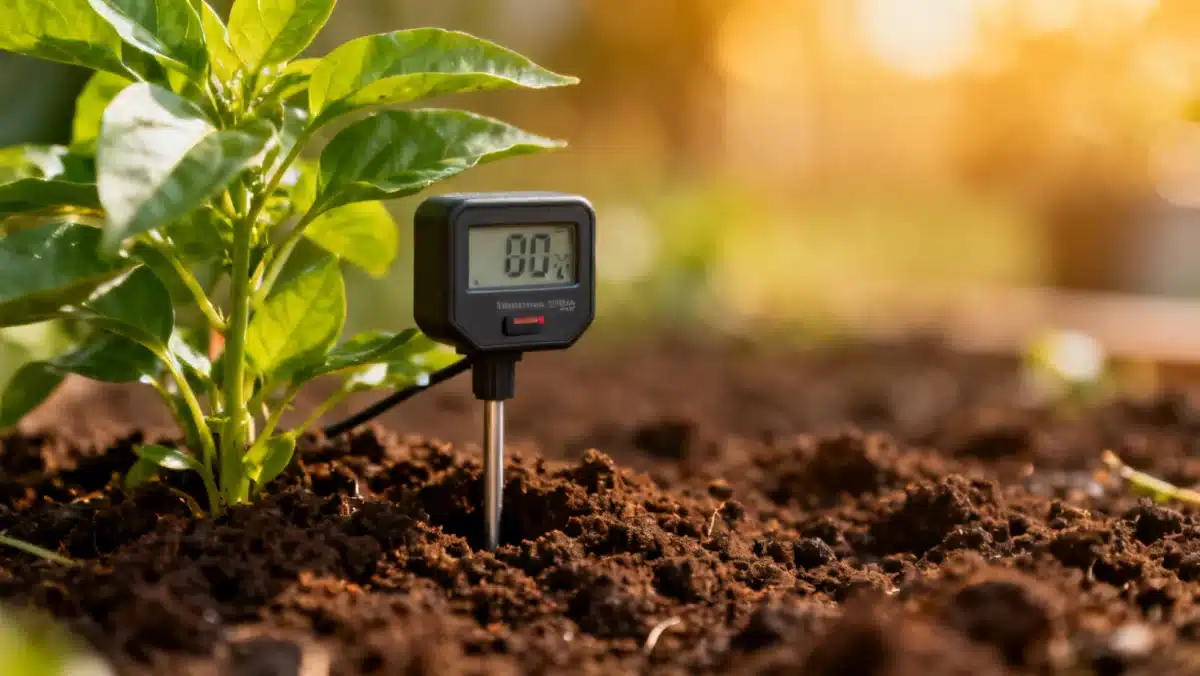
Soil moisture sensors are foundational to effective smart gardening. They provide crucial data about soil hydration levels.
These sensors communicate wirelessly with central irrigation controllers. This enables precise watering decisions based on actual need.
By preventing guesswork, these Smart Garden Devices ensure water is applied only when necessary. This drastically reduces consumption.
Their deployment is becoming standard in new smart garden installations. This highlights their importance in water-saving strategies.
Hyperlocal Soil Data for Optimized Growth
These sensors offer hyperlocal data, providing insights into specific garden sections. This granular information allows for targeted watering.
Different plant species have varying water requirements. Soil moisture sensors help meet these diverse needs efficiently.
Their robust design ensures long-term reliability in various soil types. This makes them a durable solution for water management.
The accuracy provided by these sensors is paramount. It underpins the effectiveness of Smart Garden Devices: 4 Innovations That Reduce Water Usage by 30%.
Smart Controllers and Centralized Management Platforms
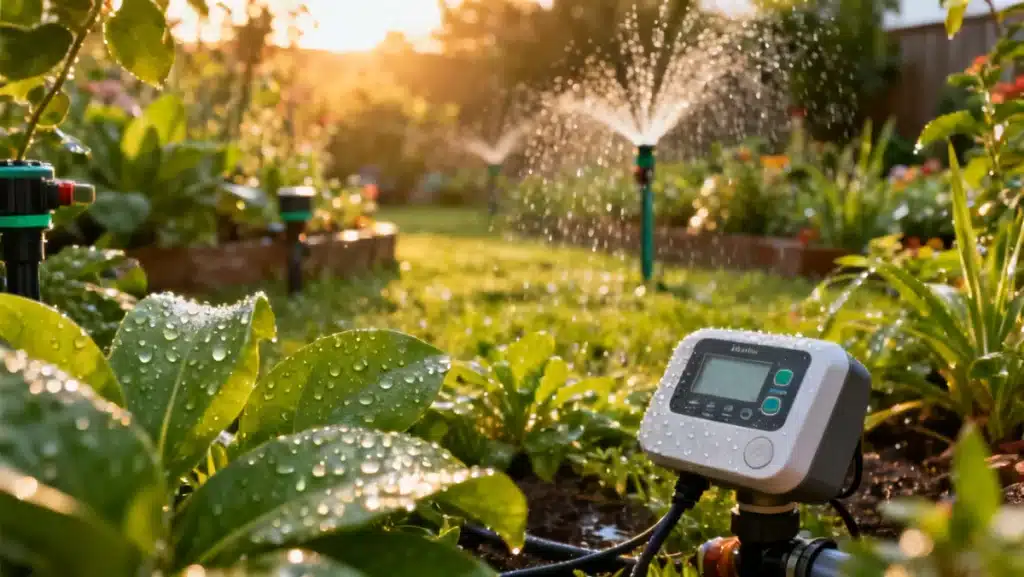
Smart controllers are the brains of modern irrigation systems. They connect all components, from sensors to sprinklers.
These platforms offer intuitive interfaces for users to monitor and manage their gardens remotely. This enhances convenience and control.
The ability to access real-time data and adjust settings from anywhere is a game-changer. It empowers users to be more proactive.
Centralized management platforms aggregate data from multiple Smart Garden Devices. This provides a comprehensive overview of water usage.
Seamless Integration with Home Automation Systems
Many smart controllers integrate seamlessly with existing home automation systems. This creates a unified smart home ecosystem.
This integration allows for greater control and automation. Users can manage their garden alongside other smart home features.
The interoperability of these devices is a key factor in their adoption. It simplifies management for the average homeowner.
Such advanced integration enhances the overall user experience. It makes managing Smart Garden Devices more accessible.
Rainwater Harvesting and Greywater Recycling Integration
Beyond optimizing municipal water, Smart Garden Devices are increasingly integrating with alternative water sources. Rainwater harvesting is a prime example.
Systems now automatically switch to collected rainwater for irrigation. This significantly reduces reliance on potable water supplies.
Greywater recycling systems are also being incorporated. Treated wastewater from homes can be repurposed for garden use.
These innovations represent a holistic approach to water conservation. They highlight the versatility of modern smart garden technology.
Sustainable Water Sourcing for Gardens
The integration of rainwater harvesting significantly lowers water bills. It also reduces the ecological footprint of gardening.
Greywater recycling offers a pragmatic solution for regions facing water scarcity. It transforms waste into a valuable resource.
These advanced Smart Garden Devices are designed for easy installation and maintenance. This encourages broader adoption among homeowners.
By leveraging these sustainable water sources, the potential for reducing water usage by 30% or more becomes highly achievable.
Data Analytics and Predictive Modeling for Future Efficiency
The next frontier for Smart Garden Devices involves sophisticated data analytics. This moves beyond real-time adjustments to predictive modeling.
These systems analyze historical weather patterns, plant growth data, and soil conditions. This anticipates future watering needs.
Predictive modeling allows for even greater water efficiency. It prevents problems before they arise, optimizing resource allocation.
This advanced capability means that Smart Garden Devices are not just reactive but proactively manage water resources.
Machine Learning Enhances Water Management
Machine learning algorithms are central to this predictive capability. They continuously learn and refine watering strategies over time.
Each season, the system becomes smarter and more efficient. This leads to sustained reductions in water consumption.
This continuous improvement ensures that the garden receives precise care. It adapts to changing environmental conditions effortlessly.
The long-term benefits of such intelligent systems are substantial. They solidify the role of Smart Garden Devices in sustainable practices.
User-Friendly Interfaces and Remote Accessibility
Accessibility remains a key focus for developers of Smart Garden Devices. Intuitive user interfaces make these technologies approachable for everyone.
Mobile applications allow homeowners to manage their gardens from anywhere. This offers unparalleled flexibility and control.
These platforms provide clear, actionable insights into water usage. This empowers users to make informed decisions about their irrigation.
The ease of use ensures that the benefits of Smart Garden Devices are widely adopted. It removes barriers to sustainable gardening.
Empowering Homeowners with Garden Control
Detailed reports on water consumption are readily available. This transparency helps users understand their impact on the environment.
Alerts notify users of potential issues or system changes. This proactive communication maintains optimal garden health.
The remote accessibility boosts convenience for busy individuals. It ensures gardens are always cared for, regardless of location.
This blend of technology and user-centric design makes Smart Garden Devices: 4 Innovations That Reduce Water Usage by 30% a practical solution for modern living.
Perspectives
The evolution of Smart Garden Devices marks a pivotal moment in environmental stewardship and home automation. These innovations are not merely gadgets; they are essential tools for a future where water conservation is paramount. Expect to see continued advancements in AI integration and sensor technology, making these systems even more intuitive and efficient. The widespread adoption of Smart Garden Devices: 4 Innovations That Reduce Water Usage by 30% will undoubtedly play a critical role in addressing global water challenges, transforming how we interact with our landscapes and ensuring sustainable practices for generations to come. The trajectory points towards increasingly autonomous and interconnected garden management solutions.